
Tile Flooring Installation San Antonio | Local Installers
Tile is one of the most unforgiving flooring materials to install incorrectly. A subfloor that is off by a fraction of an inch causes tile lippage — edges that sit higher than adjacent tiles. Thinset coverage that falls below full contact leaves hollow spots under the tile that crack under daily foot traffic. Grout joint spacing that drifts even slightly throws off the pattern across an entire room. These are not cosmetic issues. They are structural failures that require tearing out and starting over.
MoveNReady provides tile flooring installation in San Antonio for homes across San Antonio and Bexar County. We install ceramic tile, porcelain tile, and natural stone tile in kitchens, bathrooms, entryways, and living areas. Every installation starts with proper subfloor preparation and ends with a final walk through before we leave the job site.
✅ Licensed and Insured
✅ Local San Antonio Team
✅ Ceramic, Porcelain, and Natural Stone Tile
Tile Flooring Installation Services in San Antonio
Tile flooring installation in San Antonio presents specific challenges that are different from other markets. Most San Antonio homes sit on concrete slab foundations. Slabs in Bexar County shift over time from expansive clay soil movement beneath them. Those shifts create surface variations that require correction before any tile goes down. South Texas humidity and temperature cycles also affect how adhesives cure and how grout joints perform over time.
We address those conditions before installation begins. Moisture testing confirms the slab is dry enough for tile adhesion. Subfloor flatness gets verified against the industry standard of no more than 3/16 inch variation over 10 feet. High spots get ground down. Low spots get filled with self-leveling underlayment. Wet areas get a waterproofing membrane or crack isolation membrane installed before any tile or thinset mortar goes down.
Skipping those steps is the reason tile floors crack, hollow out, and fail within a few years. We do not skip them.
If your tile installation is part of a bathroom remodeling or kitchen remodeling project, we coordinate with the renovation crew so all plumbing, waterproofing, and fixture work is complete before tile goes down.
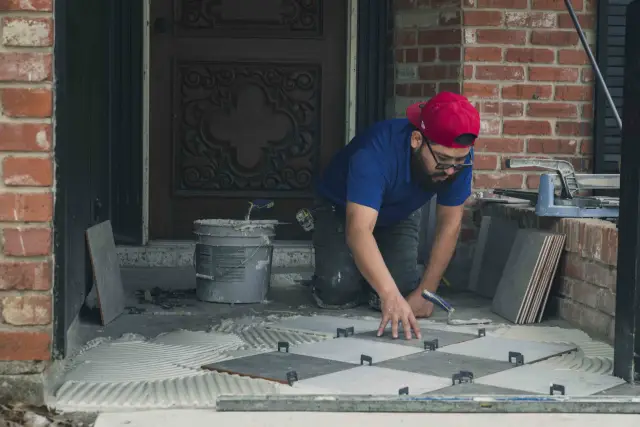
Residential Tile Flooring in San Antonio — Types We Install
Residential tile flooring in San Antonio comes in three primary categories. Each material has different installation requirements, different performance characteristics, and different maintenance needs. Choosing the right tile for the room matters as much as installing it correctly.
Ceramic Tile Flooring San Antonio
Ceramic tile flooring is the most widely installed tile type in San Antonio homes. It works well in kitchens, bathrooms, laundry rooms, and moderate-traffic living areas. Ceramic resists moisture and stains, cleans easily, and holds up well under everyday residential use.
Ceramic tile installation starts with a verified flat substrate. We apply modified polymer thinset mortar with a notched trowel sized to the tile format. Calibrated spacers maintain consistent grout joint width throughout the layout. We plan the layout from the center of the room outward using a chalk line grid so cuts at walls are balanced on both sides and no awkward thin cuts land in visible areas.
Sanded grout fills joints wider than 1/8 inch. Unsanded grout fills tighter joints. We select mold-resistant grout for kitchens and bathrooms where moisture and cleaning chemicals are present. Grout sealing follows full cure to protect the surface and prevent staining.
Porcelain Tile Flooring San Antonio
Porcelain tile flooring is denser, harder, and more moisture-resistant than ceramic tile. It performs better in high-traffic areas, wet spaces, and anywhere the floor takes significant daily abuse. Water absorption in porcelain is less than 0.5 percent — far below ceramic — which makes it the right choice for bathrooms, entryways, and areas with direct outdoor access in San Antonio homes.
Porcelain tile installation requires more precise cutting than ceramic. Porcelain is harder and more brittle at cut edges. We use wet-saw cutting with diamond blades sized for the tile density. Large-format tile in porcelain — 24x24 and larger, which is common in modern San Antonio homes — requires back-buttering in addition to the notched trowel bed to achieve full thinset coverage across the tile face. That coverage prevents hollow spots and cracking.
Epoxy grout is available for porcelain tile in wet areas. Epoxy grout is nearly impervious to moisture, stains, and cleaning chemicals — a meaningful advantage in San Antonio bathrooms and kitchen floors that get mopped regularly.
Natural Stone Tile Floor Installation
Stone tile flooring includes travertine, slate, marble, and granite. Each material has natural variation in color, texture, and porosity that affects both how it looks and how it needs to be installed and maintained. Natural stone brings character to San Antonio homes that manufactured tile cannot replicate.
Stone tile installation requires more preparation steps than ceramic or porcelain. Travertine is porous and has natural voids in the surface that get filled before installation. Marble is soft relative to porcelain and requires careful cutting to prevent chipping at edges. Slate has natural cleft surfaces with thickness variation that requires more thinset adjustment per tile to achieve a level finished surface.
Stone sealing with a penetrating sealer is required on every natural stone installation before and after grouting. Unsealed stone absorbs grout, spills, and cleaning products that permanently stain the surface. We seal every stone floor before grouting and again after the grout is cured. We also provide care and maintenance guidance before leaving so homeowners know how to maintain their stone floor long-term.
Our Tile Floor Installation Process
Site Evaluation and Measurements
Site evaluation and written estimate start every project. We measure the space, assess the subfloor, and identify any preparation work needed before installation. The estimate is written and specific. Homeowners know exactly what is included before any work begins.
Subfloor Inspection and Preparation
Subfloor inspection and preparation follow. We check for flatness, moisture, cracks, and stability. Corrections happen before installation — not after tiles are down. Cement backer board goes down over wood subfloors before tile in wet areas. Waterproofing membrane and crack isolation membrane go down over concrete slabs in wet areas and areas with known movement history.
Layout Planning and Tile Placement
Dry layout and pattern planning happen before any adhesive is mixed. We snap a chalk line grid from the room center, place tiles without adhesive to confirm the layout, and make cut decisions before setting begins. This step prevents avoidable mistakes once the thinset mortar is mixed and working time begins.
Grouting, Finishing, and Final Walkthrough
Grouting, sealing, and finishing complete the installation. Grout gets mixed and applied with a rubber float at a 45-degree angle to fully pack every joint. Grout haze removal follows before the grout sets. Transition strips and bullnose tile finish exposed edges and room transitions cleanly. Stone sealing applies on all natural stone installations. A final walkthrough confirms alignment, grout quality, and full appearance before the project closes.
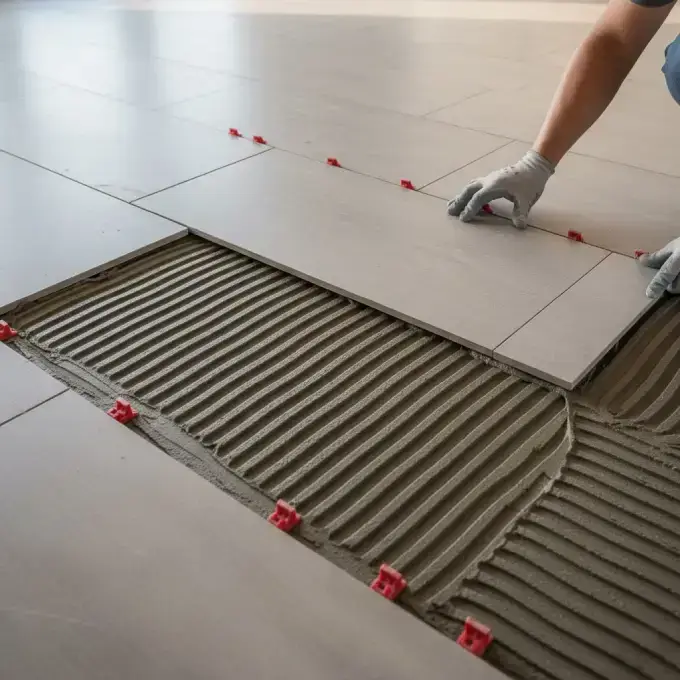
Professional Tile Flooring — Quality Standards We Follow
Professional tile flooring at MoveNReady follows installation standards that determine whether a tile floor lasts 20 years or fails in 3.
Subfloor flatness gets verified before any tile is set. Deviation beyond the tolerance for the tile format being installed gets corrected. Large-format tiles are less forgiving of subfloor variation than small tiles.
Thinset coverage must reach a minimum of 95 percent of the tile back in wet areas and 80 percent in dry areas. We achieve that through correct trowel selection and back-buttering on larger tiles throughout the installation.
Lippage prevention keeps tile edges level with adjacent tiles. We check tile planes with a straightedge throughout installation. Lippage looks bad and creates trip hazards. We do not move to grouting until the tile plane is consistent.
Grout cure time gets respected on every project. Foot traffic, cleaning, and sealing only happen after grout has cured fully. Rushing that step causes cracking and crumbling within months.
We also link to our hardwood floor installation and general flooring installation pages for homeowners considering other flooring types.
Why Choose Our Tile Installation Contractors San Antonio
1. Subfloor Preparation Before Every Installation
Tile installation contractors in San Antonio from MoveNReady treat subfloor preparation as a non-negotiable first step. Concrete slab conditions in Bexar County vary significantly from home to home. We assess and correct every time.
2. Correct Materials for Each Tile Type
We select thinset mortar, grout type, and waterproofing membrane based on the specific tile material, room use, and subfloor conditions. The wrong setting material for the tile type causes failures that a homeowner cannot see until months after installation.
3. Licensed and Insured
MoveNReady is a licensed and insured tile contractor in San Antonio. Every project carries proper documentation. You can request to see it before work begins.
4. Clean Work in Occupied Homes
Tile installation creates dust and debris. We contain work areas, protect adjacent surfaces, and clean up daily. Homeowners should not find grout dust on furniture or tile debris in hallways at the end of each day.
5. Layout Planning That Gets It Right Before Setting Starts
We plan every layout with a dry layout before any adhesive mixes. That step catches cut problems and pattern issues before they become permanent. It adds time and we do it on every project.
6. Clear Timelines and Written Estimates
Project schedules get confirmed before work starts. Written estimates are specific and complete. There are no surprise line items on the final invoice.
Serving San Antonio Homes With Tile Flooring Installation
Tile installers near me from MoveNReady serve residential properties throughout San Antonio and nearby communities including Alamo Heights, Terrell Hills, Olmos Park, Castle Hills, Balcones Heights, Leon Valley, Helotes, Shavano Park, Hollywood Park, Hill Country Village, Kirby, Converse, and Live Oak.
Local experience in Bexar County means we understand concrete slab foundation conditions, expansive clay soil movement, and South Texas humidity effects on tile adhesion and grout joint performance. We also coordinate tile installation as part of larger projects handled on our home renovations page and new construction page.
Tile Flooring Installation FAQs
What types of tile flooring do you install in San Antonio?
MoveNReady installs ceramic tile flooring, porcelain tile flooring, and natural stone tile including travertine, slate, marble, and granite for residential properties across San Antonio and Bexar County. We handle kitchens, bathrooms, entryways, and living areas.
What is the difference between ceramic and porcelain tile?
Porcelain tile flooring is denser and harder than ceramic with a water absorption rate below 0.5 percent. It performs better in high-traffic areas and wet spaces. Ceramic tile flooring works well in standard residential rooms with moderate traffic and is available in more color and finish options at lower cost.
How much does tile flooring installation cost in San Antonio?
Tile floor installation services in San Antonio typically run $8 to $15 per square foot for ceramic tile and porcelain tile including materials and labor. Natural stone tile installation runs $15 to $30 per square foot depending on stone type and preparation requirements. Subfloor preparation, waterproofing, and large-format tile layouts add to overall cost. MoveNReady provides a written estimate after a site visit before any work begins.
How long does tile installation take?
A standard bathroom of 80 to 120 square feet typically takes 2 to 4 days including preparation and grout cure time. A kitchen of 120 to 200 square feet takes 3 to 5 days. Larger rooms, natural stone tile, or extensive subfloor preparation add time. We provide a project-specific timeline before work starts.
Do you prepare the subfloor before tile installation?
Yes. Subfloor inspection, flatness correction, moisture testing, and waterproofing membrane installation are included in every tile project where needed. We do not set tile over an unprepared subfloor regardless of how the previous floor looked.
Can tile flooring be installed in an occupied home?
Yes. We work room by room in occupied homes, contain dust and debris to work areas, and clean up daily. Most residential tile installations proceed without homeowners needing to vacate the property.
Do natural stone floors require sealing?
Yes. All natural stone tile requires penetrating sealer application before grouting and again after the grout cure is complete. We seal every stone installation as part of the project and provide maintenance guidance before we leave so homeowners know when and how to reseal.
Do you handle tile installation as part of a bathroom or kitchen remodel?
Yes. Tile installation gets coordinated directly with bathroom remodeling and kitchen remodeling projects under one contract. Tile goes down after plumbing, waterproofing, and fixture rough-in are confirmed complete.
Schedule Tile Flooring Installation in San Antonio
MoveNReady provides tile flooring installation in San Antonio, TX for homeowners who want correct preparation, precise layout, and tile floors that hold up under daily use for years. Ceramic tile, porcelain tile, and natural stone tile installed across San Antonio and Bexar County under one licensed and insured team.
If your tile project is part of a larger home renovation, we coordinate everything under one contract. Nothing gets skipped between trades.